.png )

Recent Posts


























































Why Handcrafted Wooden Ram Mandirs Are Always a Better Choice

When someone asks why we bother sourcing from small artisan workshops instead of just stocking whatever sells fastest. Fair question, honestly. The answer comes down to what happens after delivery, not before. A mass-produced piece photographs fine. Give it six months in someone's home, and the cracks start showing, sometimes literally.
At Indoscraft, we go through a fair bit of back and forth with individual craftsmen before anything lands on our site. Not every workshop makes the cut. We've turned away pieces that looked decent in catalog photos but fell apart under a closer look at the journey.
Finding the Perfect Wooden Ram Mandir
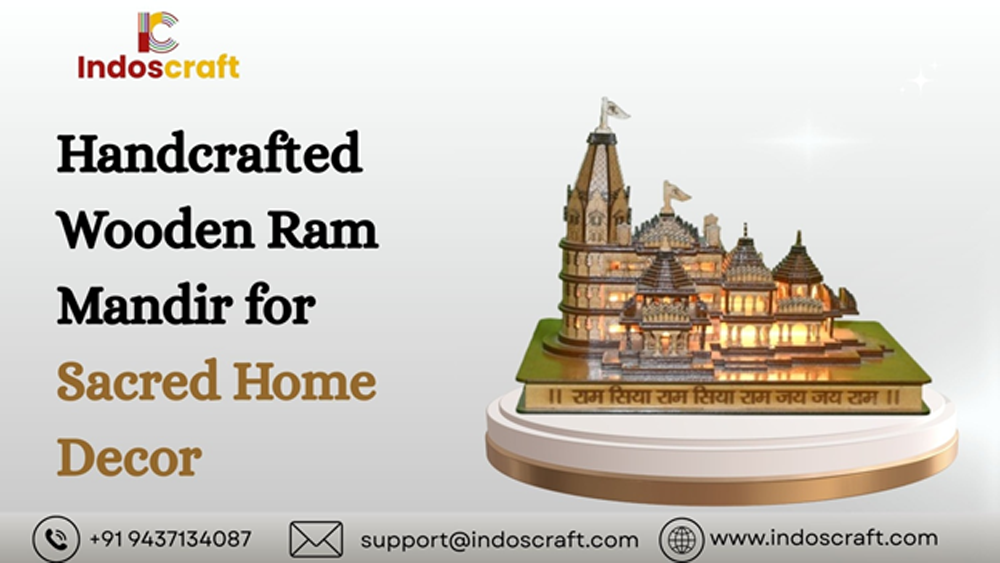
While half the listings, you'll find while searching for a Ram Mandir online throw around the word "handmade" pretty loosely. And we know that is why we check for the actual signs of it ourselves before listing anything, small irregularities in the carving, a petal cut slightly deeper on one side than the other, or grain that doesn't repeat in a perfectly symmetrical pattern. A machine really can't replicate that kind of imperfection convincingly, no matter how advanced the cutting tool.
Our Ram Mandir wooden models come from craftsmen who've spent years, in some cases decades, working almost exclusively with teak and sheesham. We deal with them directly rather than through several layers of distributors, so there's less markup and, honestly, a clearer sense of who actually made what you're buying.
Quality and Finish That Make a Difference
Cheap temples don't hide their flaws for long. Paint chips within a couple of months. Joints start wobbling. Now and then, the wood cracks outright, usually because nobody bothered seasoning it properly before carving started.
We only work with artisans who season wood first, no shortcuts there. Hand-applied polish also brings out the grain texture that a factory spray finish just smooths over completely, flattening whatever character the wood originally had. If you're buying elsewhere, run your finger along the pillar carvings and border detailing before paying. Bad craftsmanship shows up fastest in those small spots.
Size and Space Guide
A twelve-inch model works fine for a shelf corner in most one-bedroom apartments. Go bigger than that, and it starts eating into wall space meant for other things. The homes with a separate puja room can usually handle something larger, two feet or beyond, particularly if the temple's meant to be the visual anchor of the room rather than just sitting off to one side.
Measure your actual space first. Product photos almost always make pieces look smaller than they turn out once they're physically in front of you.
What Makes a Temple Strong and Durable
Most of what we carry uses teak or sheesham for every Ram Mandir wooden temple. Teak handles humidity noticeably better, which matters given how rough Indian monsoons get most years. Sheesham has a deeper, richer tone and carves beautifully for fine detail work, though it does need a bit more attention in very dry climates where it can shrink slightly over time.
Caring for Your Temple the Right Way
Wipe it down daily with a soft, dry cloth to keep dust from settling into the carved details. Skip long stretches of direct sunlight, since it dries out the wood's natural oils and fades polish faster than most people expect. Every couple of months, a light coat of wood polish keeps things looking fresh without overdoing it.
FAQs
Look closely at the wood type and joinery method, and ask for actual photos instead of trusting a rendered image. Getting the size right for your space matters just as much as the design itself.
It usually mirrors specific architectural details from the real Ayodhya structure, particular spire shapes, arch patterns, and carved motifs, giving it a distinct look next to standard temple designs.
Teak and sheesham both work well, just for different reasons. Teak holds up better against humidity, while sheesham offers a richer tone and takes finer detail during carving.
Wipe it daily with a dry, soft cloth, stay away from harsh chemical cleaners, and apply a mild wood polish every couple of months to keep the finish from fading.
Leave a Reply
Your email address will not be published. Required fields are marked
Comments